
Snapchat Planet Order 2026: All 8 Planets, Meanings & Best Friends Ranking Explained
Ever tapped on a friend’s profile and seen a glowing planet badge, but had no idea what it meant? You’re not alone. The Snapchat Planet Order is one of the most talked-about features of Snapchat Plus in 2026. This complete guide covers every planet, its meaning, how the Snapchat Friend Solar System works, and exactly how your best friend’s ranking is calculated, all in one place.
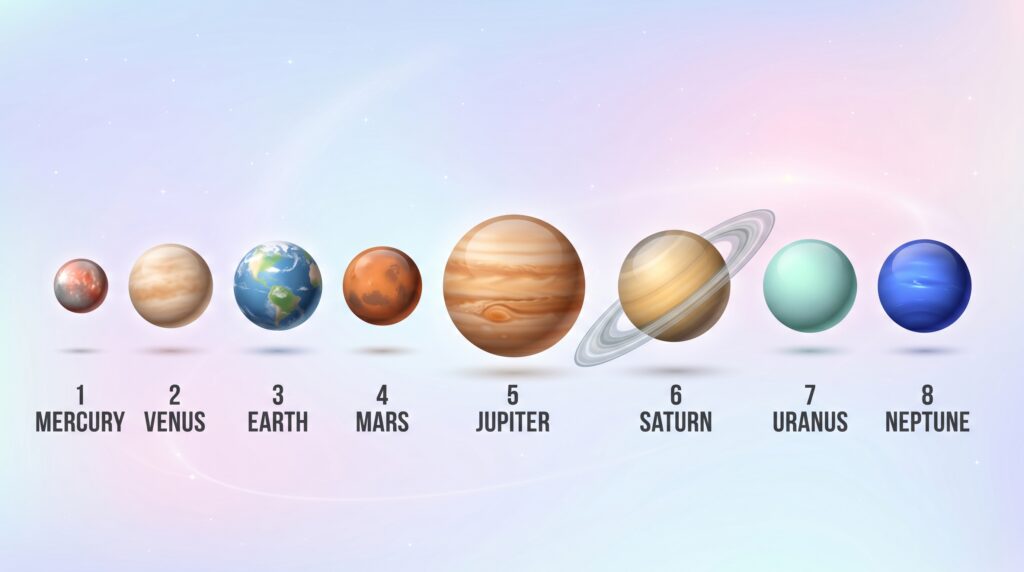
Snapchat Planet order 2026 showing all 8 planets from Mercury to Neptune in the friend Solar System.
What is the Snapchat Planet Order?
The Snapchat Planet Order is a visual friendship ranking system available exclusively to Snapchat Plus subscribers. Officially called the Snapchat Friend Solar System, it represents your top 8 closest friends as planets orbiting around you, the Sun.
The order of planets follows the real solar system: Mercury, Venus, Earth, Mars, Jupiter, Saturn, Uranus, and Neptune. The closer a planet is to the Sun, the more it interacts with that friend. The further away, the less interaction you’ve had recently.
Think of it like this: If you snap and chat with someone every single day, they’ll be your Mercury, your #1 best friend. If you barely interact with someone but they’re still in your top 8, they’ll appear as Neptune, the farthest planet.
Important: The Snapchat Planet Order is only visible to Snapchat+ subscribers. Free users cannot see or access the Friend Solar System feature. Your ranking is also completely private. Your friends cannot see their position in your solar system unless they tap the badge themselves.
Snapchat Planets Order: Quick Reference Table
Here’s the complete Snapchat planets in order at a glance, including each planet’s color, emoji style, and what friendship position it represents:
| # | Planet | Color | Hearts? | Friendship Rank |
|---|---|---|---|---|
| 1 | Mercury | Red | ✅ Red hearts | #1 Closest Best Friend |
| 2 | Venus | Light Brown | ✅ Pink, blue, yellow | #2 Best Friend |
| 3 | Earth | Blue & Green | ✅ Red hearts + stars | #3 Best Friend |
| 4 | Mars | Red/Orange | ✅ Pink & blue hearts | #4 Best Friend |
| 5 | Jupiter | Orange | ❌ Stars only | #5 Best Friend |
| 6 | Saturn | Yellow (with rings) | ❌ Stars only | #6 Best Friend |
| 7 | Uranus | Green | ❌ Stars only | #7 Best Friend |
| 8 | Neptune | Deep Blue | ❌ Blue stars only | #8 Best Friend |
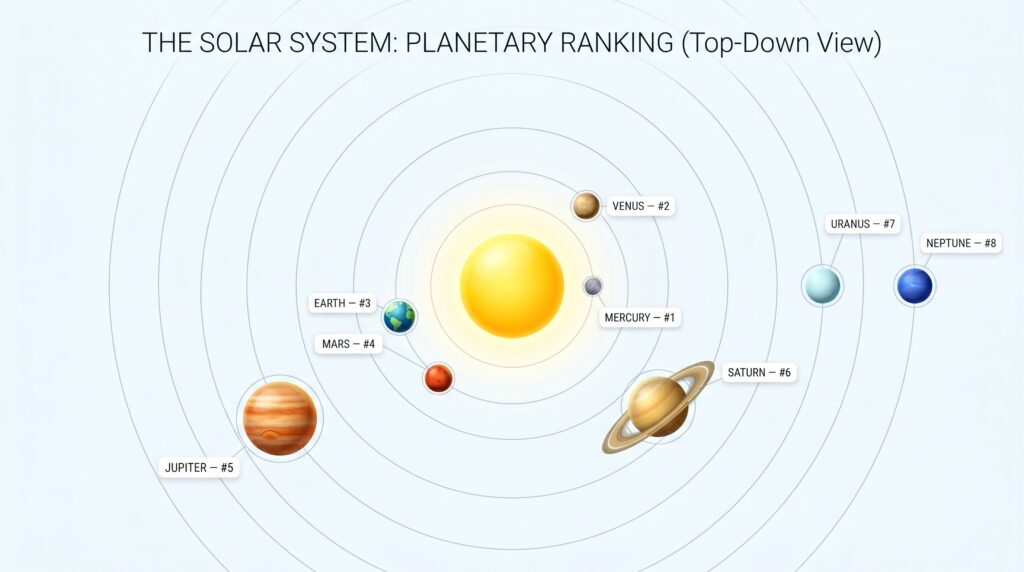
Snapchat Friend Solar System diagram showing all 8 planets with their colors and emoji representations.
All 8 Snapchat Planets Explained: Meanings & Friendship Levels
Now, let’s go deep into what each planet in the Snapchat solar system order actually means for your friendship. Each planet has a unique visual design and represents a specific closeness level with that friend.
🔴 Rank #1: Mercury
Your Ultimate Best Friend
Mercury is your #1 closest friend on Snapchat. You snap and chat with this person more than anyone else. Shown as a red planet surrounded by red hearts and small stars. If someone is your Mercury, you likely have a 100+ day streak, daily chats, and constant snap exchanges. This is your ride-or-die Snapchat bestie.
🟤 Rank #2: Venus
Super Close Friend
Venus represents your second closest friend. Shown as a light brown planet with pink, blue, and yellow hearts. You still chat and snap very regularly with this person, just slightly less than your Mercury friend. Being someone’s Venus still means an extremely strong, active friendship.
🌍 Rank #3: Earth
Strong, Regular Friend
Earth means you are someone’s third-best friend. Shown with blue and green colors, red hearts, yellow stars, and one moon. You probably chat several times per week with engaged, meaningful conversations. Not quite daily like Mercury, but still a core part of their Snapchat world.
🔴 Rank #4: Mars
Good Friend
Mars is your fourth closest friend in the Snapchat planet system. Displayed as a red/orange planet with pink and blue hearts floating around it. Interactions are less frequent than inner-circle planets — perhaps a few times a week — but the friendship is still solid and enjoyable.
🟠 Rank #5: Jupiter
Casual Friend
Jupiter represents your fifth best friend. Shown as a large orange planet with shining stars but no hearts — a signal that the emotional closeness has started to decrease. You communicate occasionally, but deep daily conversation is less common. Still a valued connection.
🟡 Rank #6: Saturn
Occasional Buddy
Saturn is your sixth closest friend, shown as a yellow planet with distinctive rings and stars — but no hearts. You interact every now and then. The friendship may have been stronger in the past but has become more casual. Saturn’s iconic rings make it one of the most visually recognizable planets in the Snapchat solar system.
🟢 Rank #7: Uranus
Low Interaction
Uranus represents your seventh best friend — someone still in your top 8 but with minimal recent interaction. Shown as a green planet with layered patterns and surrounding stars, no hearts. You’re connected but conversations are rare and infrequent.
🔵 Rank #8: Neptune
Distant Connection
Neptune is the farthest planet and represents your 8th closest friend — the one you interact with the least among your top 8. Displayed as a deep blue planet with blue stars and no hearts. If you’re someone’s Neptune, your Snapchat bond has significantly weakened compared to other friends.
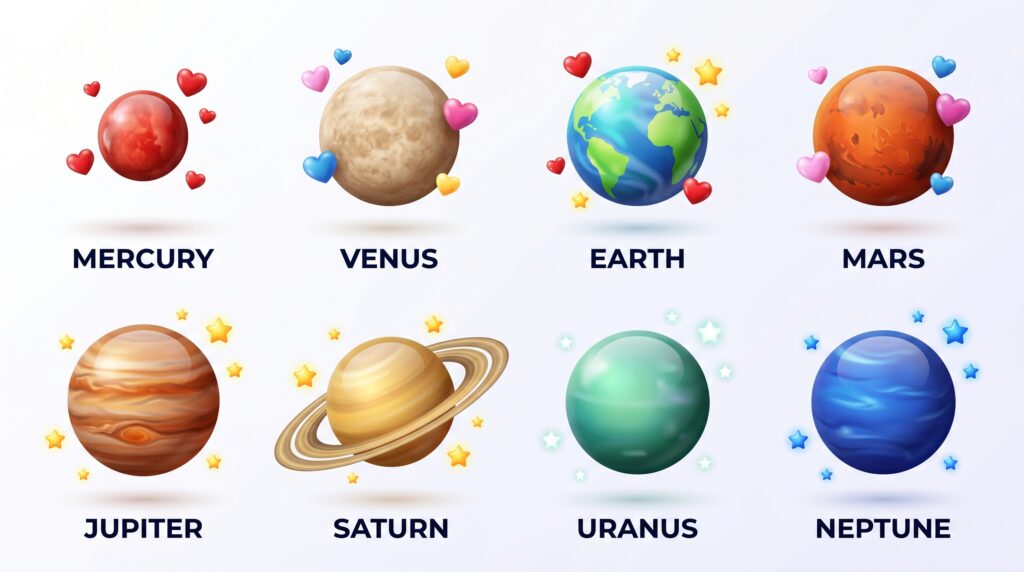
Each Snapchat planet’s emoji design shows hearts, colors, and stars for Mercury through Neptune.
How Does the Snapchat Friend Solar System Work?
The Snapchat Friend Solar System is powered by Snapchat’s interaction tracking algorithm. Here’s what you need to know about how it works under the hood:
- You are the Sun: Your friends orbit around you as planets.
- Snapchat tracks your activity over a rolling two-week period.
- The more snaps, chats, streaks, and story interactions you share with someone, the closer their planet.
- Planet positions update automatically. They are not fixed.
- Your ranking in someone else’s solar system is completely separate from your own.
- The feature is private. Only you can see your own planet rankings.
One key thing many people miss: planets with hearts (Mercury, Venus, Earth, Mars) represent emotionally close, high-interaction friendships. Planets without hearts (Jupiter, Saturn, Uranus, Neptune) represent more casual or distant connections. This visual distinction is a clever design choice by Snapchat.
Best Friends Badge vs Friends Badge: What’s the Difference?
⭐Best Friends Badge
You are in each other’s top 8. The badge has a golden ring. Both of you appear as planets in each other’s solar system.
🤝 Friends Badge
You are in their top 8, but they are NOT in yours. Shown without the golden ring. You can still tap to see your planet in their system.
How to Check Your Snapchat Planet Order?
Checking your position in a friend’s Snapchat solar system order is simple. Follow these steps:
1. Subscribe to Snapchat Plus: The Friend Solar System is exclusive to Snapchat+ subscribers. Without a subscription, you cannot see any planet badges.
2. Open a friend’s profile: Go to the profile of a friend you want to check your rank with.
3. Look for the badge: You’ll see either a “Best Friends” badge (gold ring) or a “Friends” badge near their Bitmoji.
4. Tap the badge: This reveals which planet you are in their solar system, from Mercury (#1) to Neptune (#8).
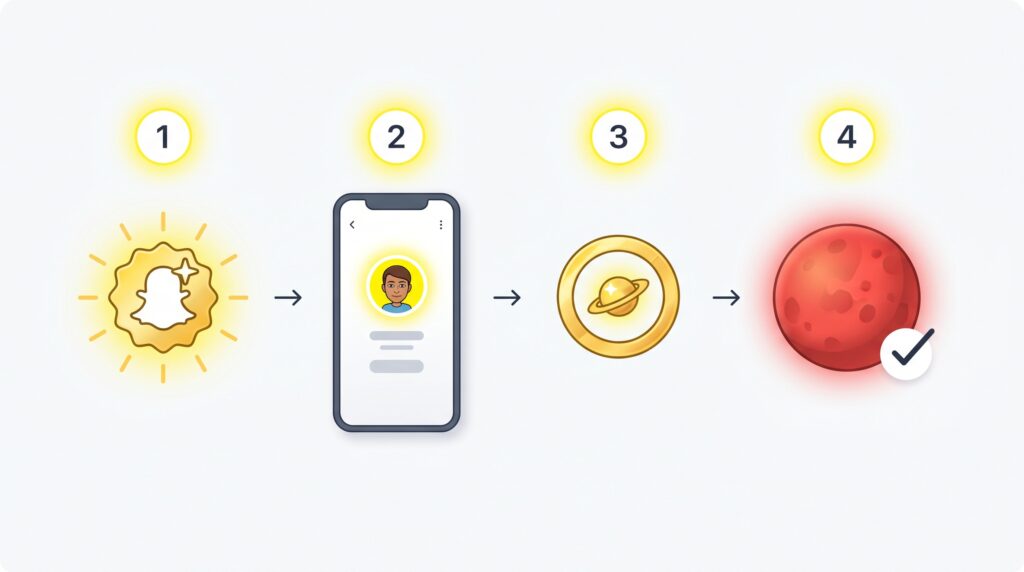
How to check the Snapchat planet order? Tapping the best friend’s badge on a friend’s profile to reveal your planet.
How to Improve Your Snapchat Planet Ranking?
Want to become someone’s Mercury or move up from Neptune? Your Snap Planet order is not fixed. It updates constantly based on your recent activity. Here’s how to improve your position:
- 📸 Send snaps daily: Frequent snap exchanges are the strongest signal Snapchat uses to measure closeness.
- 💬 Chat regularly: Active conversations in the chat tab boost your interaction score significantly.
- 🔥 Maintain streaks: Snapstreaks show consistent daily engagement and directly affect your planet ranking.
- 👁️ Engage with Stories: Viewing, reacting to, or replying to a friend’s story adds to your interaction count.
- 📍 Use Snap Map: Being active on Snap Map signals that you’re an engaged Snapchat user overall.
- 🎯 Send personalized content: Inside jokes, custom snaps, and meaningful messages build a real connection that the algorithm rewards.
Important Note: You cannot manually change your Snapchat planet position. The system updates automatically every few days based on your real interaction patterns over the past two weeks. There are no shortcuts; only genuine engagement works.
Why Did My Snapchat Planet Position Change?
Many users are surprised when their Snapchat planets’ order best friends ranking suddenly shifts. Here are the most common reasons:
- You interacted less with that friend recently; even a few days of reduced snapping can move someone further from the Sun.
- Another friend became more active: If someone else starts snapping you more, they may push existing friends further out.
- Streak broken: Losing a Snapstreak can noticeably impact your ranking with that person.
- The algorithm reset: Snapchat recalculates rankings on a rolling two-week window, so old interactions eventually drop off.
Remember: your position in someone’s solar system can be completely different from their position in yours. You could be their Mercury while they’re your Saturn, and that’s entirely normal.
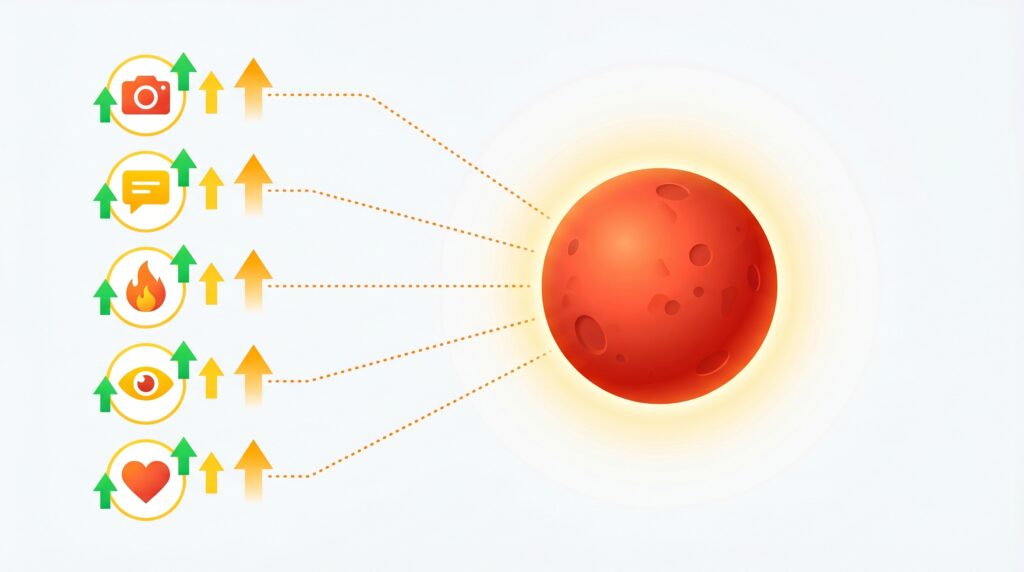
How to improve Snapchat planet order ranking? Tips for moving up in the Snapchat friend solar system.
Frequently Asked Questions
Final Thoughts
The Snapchat Planet Order is a clever, fun way to visualize your friendships inside the app. Whether you’re Mercury to someone’s solar system or still orbiting as Neptune, every planet represents a real connection. Now that you know exactly what each planet means, how the Snapchat Friend Solar System works, and how to improve your ranking, you have everything you need to navigate your Snapchat universe with confidence.